Puno Altitude and Altitude Sickness at Lake Titicaca
Puno sits at 3,827 m and Lake Titicaca at 3,810 m, higher than Cusco. Every stop in metres, from the Uros to Amantani's summit, and how to plan your first days.
Puno is at 3,827 m and the surface of Lake Titicaca at 3,810 m, about 430 m higher than Cusco (3,399 m), so most visitors feel the altitude here, at least on the first day. Expect to be short of breath on stairs and to sleep lightly the first night; a mild headache is common. The answer is to plan the first day gently: arrive, walk slowly, eat lightly, and keep the boat and the climbs for the second day.
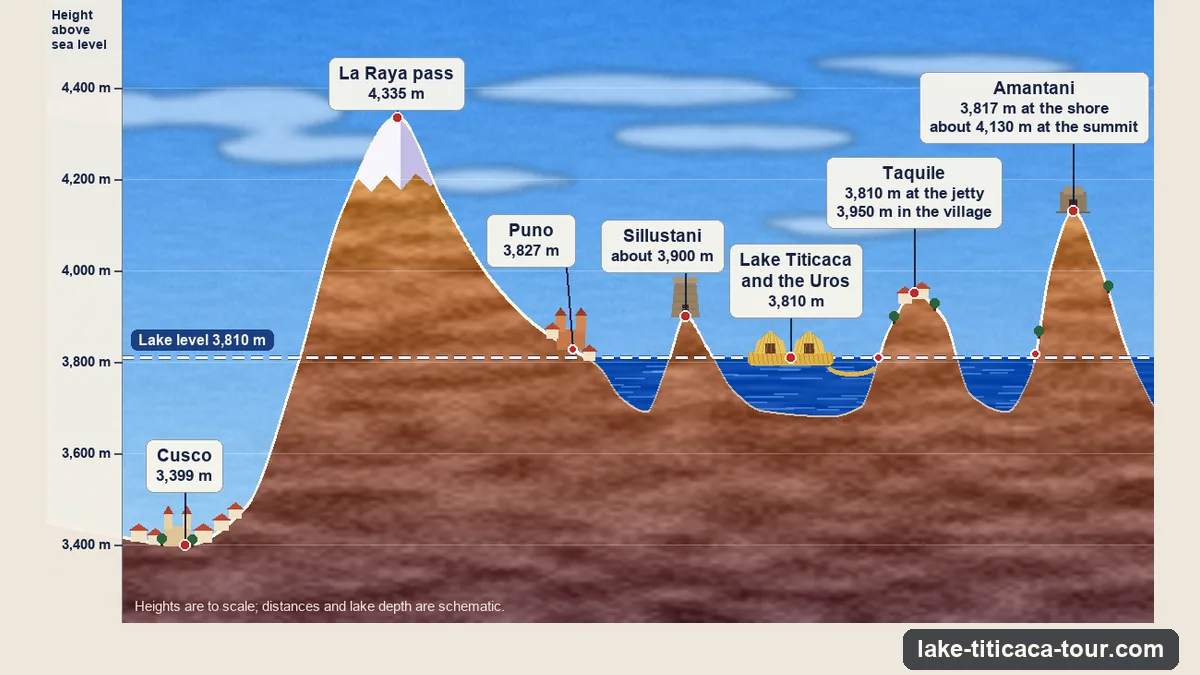
Every stop, in metres
| Place | Altitude | What you do there |
|---|---|---|
| Cusco | 3,399 m | Where most people arrive from |
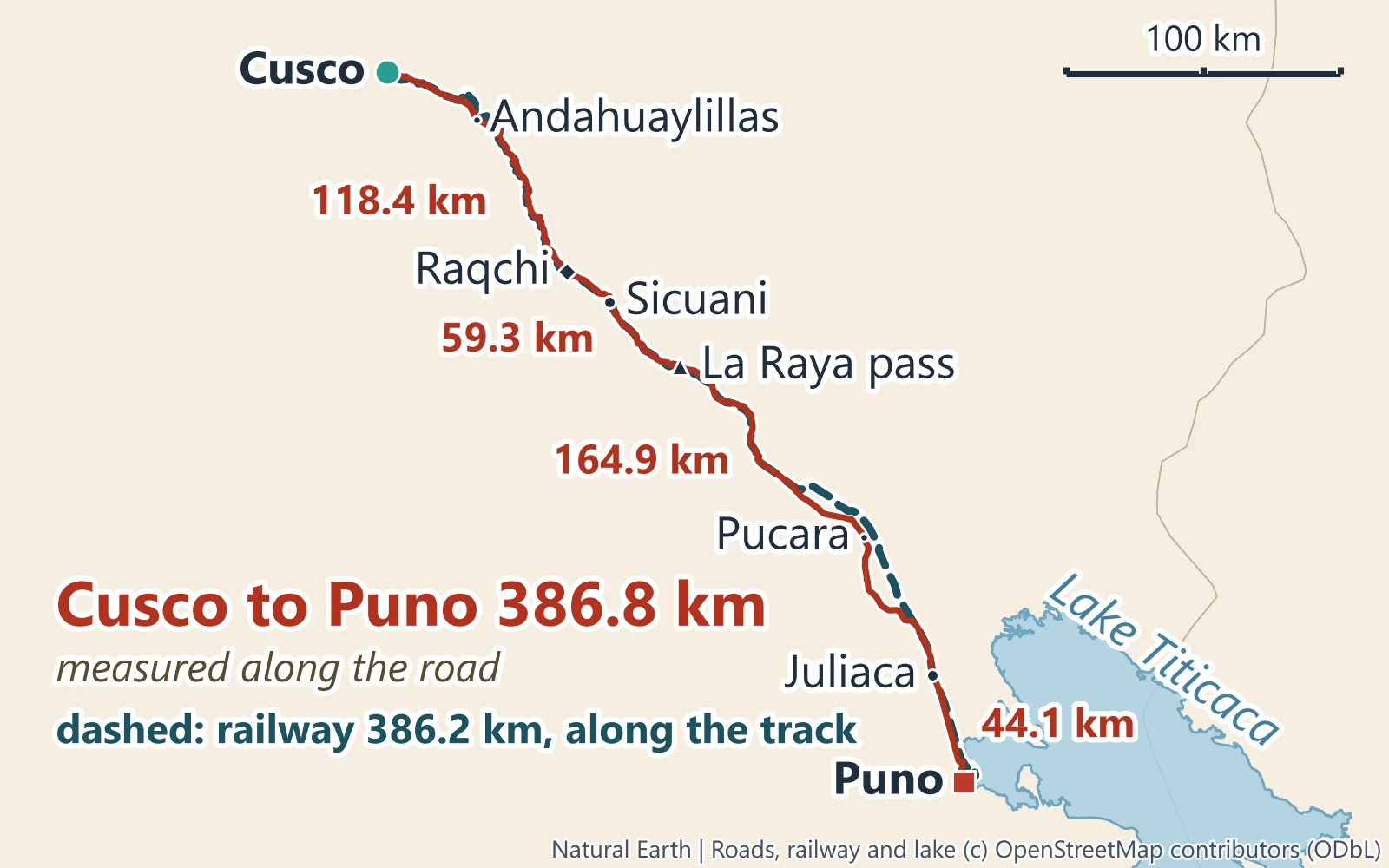
| La Raya pass | 4,335 m | Highest point of the road and railway from Cusco |
| Puno | 3,827 m | Your base: hotels, port, restaurants |
| Lake Titicaca and the Uros | 3,810 m | The reed islands, a flat visit |
| Taquile | 3,810 to 3,950 m | A steady climb from the jetty to the village |
| Amantani | 3,817 m at the shore, about 4,130 m at the summit | The sunset walk on the homestay |
| Sillustani | about 3,900 m | Gentle paths among the tombs |
Puno from the Municipalidad Provincial de Puno; the lake from SERNANP; Cusco from INEI; La Raya from PeruRail; Taquile and Amantani’s shore from the Peruvian Congress’s profile of the Puno region; Amantani’s summit and Sillustani from the tour listings. Checked October 2026.
Will I get altitude sickness?
Some people do and some do not, and fitness does not predict it. The US Centers for Disease Control and Prevention (CDC) advises travellers to high altitude to ascend gradually and to talk to a doctor before the trip about medication to prevent altitude illness, such as acetazolamide; above 3,000 m, it suggests raising the altitude you sleep at by no more than about 500 m a day. Coming from Cusco, you sleep about 430 m higher in Puno than you did the night before, within that guide; flying straight from the coast to Juliaca, you go up more than 3,000 m in one step.
The usual signs of mild altitude sickness are a headache, tiredness, poor sleep and a loss of appetite. Rest, water and not going higher usually help. Symptoms that get worse, confusion or breathlessness at rest need a doctor at once; many of the island boats and the sightseeing buses from Cusco carry oxygen.
How to plan your days
- Arrive from Cusco if you can. A few days there first make Puno much easier.
- Day one: no boat, no climbs. Walk around the Plaza de Armas and Jirón Lima, or take the flat Uros trip in the afternoon.
- Day two: the Uros and Taquile day with its walk up Taquile, or Sillustani.
- Day three and after: the Amantani homestay and its sunset walk to about 4,130 m.
What helps
- Drink water and go easy on alcohol for the first day or two.
- Eat light meals. Coca tea is offered everywhere in Puno; it is a local custom, not a cure.
- Protect yourself from the sun. At 3,800 m the sun burns quickly even when the air is cold.
- Dress in layers. Days are mild and nights are cold, close to freezing in June and July.
How these facts were checked
Altitudes as listed under the table, read 27 October 2026. The advice on gradual ascent and preventive medication is from the CDC Yellow Book chapter “High-Altitude Travel and Altitude Illness” (cdc.gov). This guide is general information, not medical advice: ask your doctor before you travel to altitude.
An Easy First Outing: the Uros in Three Hours
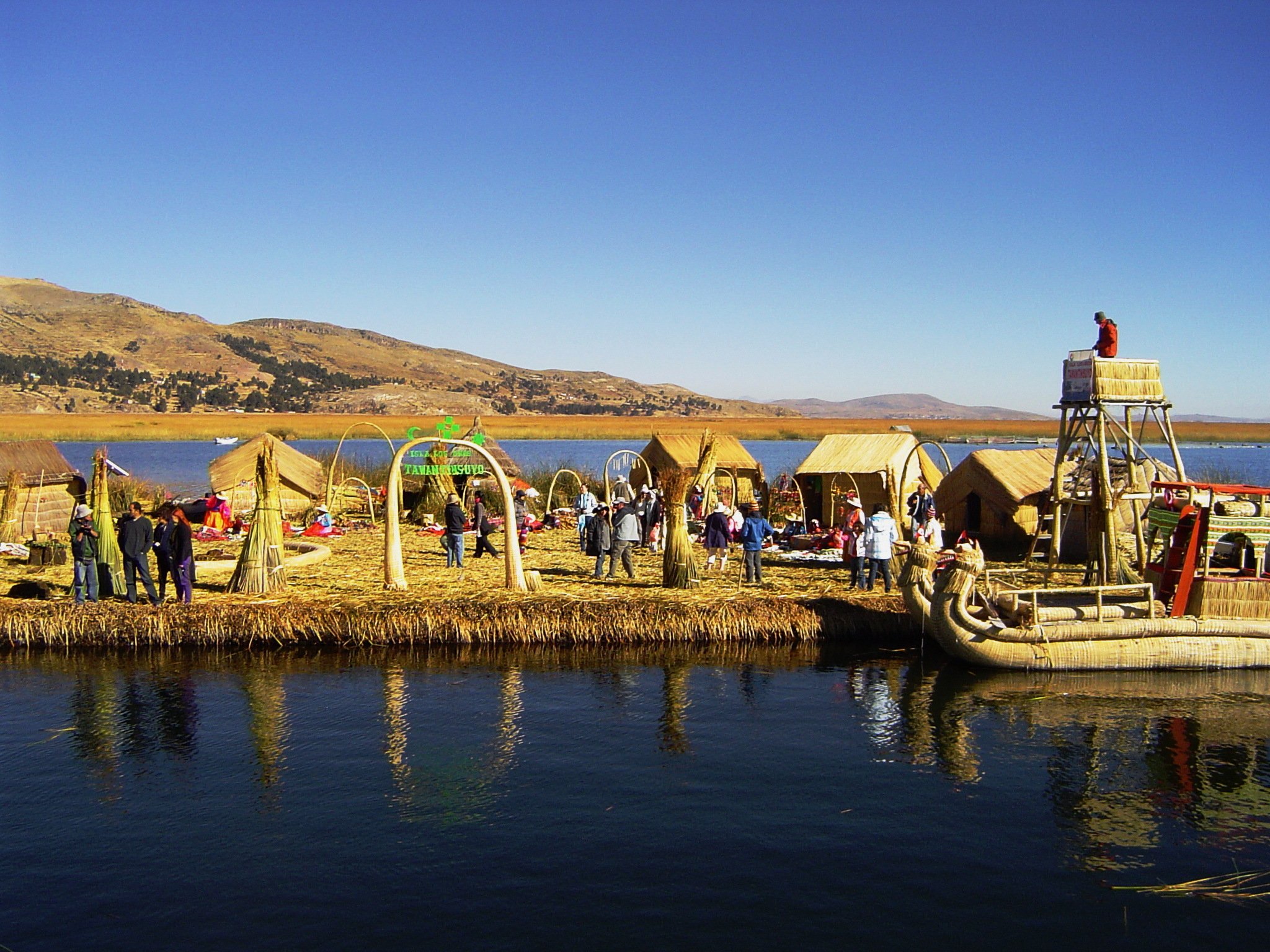
On your first day in Puno, keep it short and flat: the Uros trip has no climb, picks you up at your hotel and has you back about three hours later, with the landing fee included. Save Taquile's climb for your second day.
Check Dates for the Uros