Lake Titicaca: Peru or Bolivia?
Peru for the Uros, Taquile and Amantani from Puno, on the way from Cusco; Bolivia for Copacabana and the Isla del Sol, on the way to La Paz. Which side suits your trip, and how to do both.
For most first visits, choose Peru: the Uros reed islands, Taquile and the Amantani homestay all leave from Puno, and Puno is on the road and railway from Cusco and Machu Picchu. Choose Bolivia if you are travelling on to La Paz, or if the Isla del Sol, the island of the Inca origin legend, is what you came for. The lake is shared by the two countries, and the border at Kasani is 130 km from Puno by road, so you can also do both.
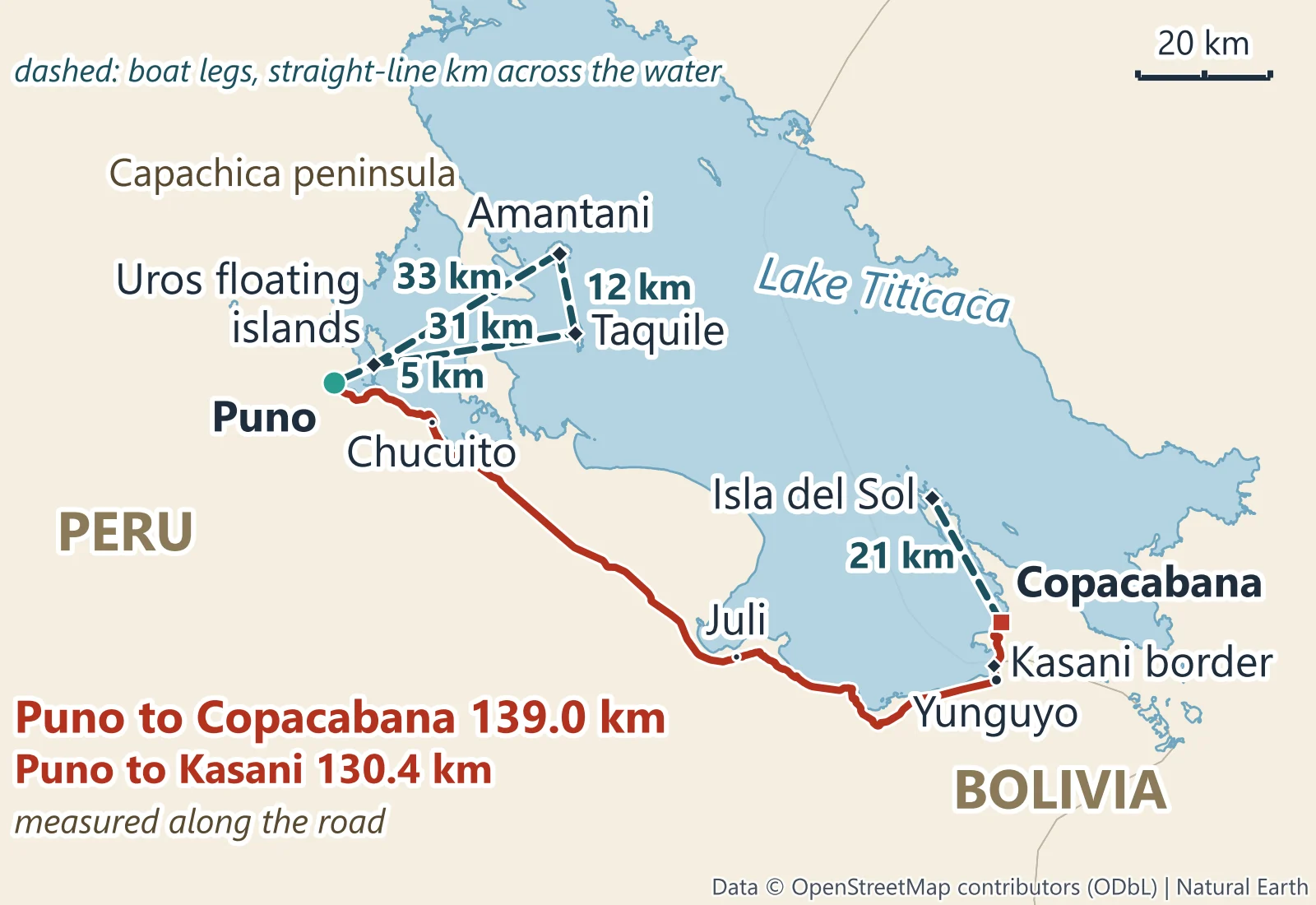
The two sides compared
| Peru: Puno | Bolivia: Copacabana | |
|---|---|---|
| The big sights | The Uros floating islands, Taquile’s textiles, a night on Amantani, the Sillustani tombs | The Isla del Sol and its Inca ruins, the basilica of Copacabana |
| Getting there | On the road and railway from Cusco; airport at Juliaca | From La Paz by road; from Puno across the Kasani border |
| Tours | Many day tours and two-day homestays, with hotel pick-up | Boats from the beach to the Isla del Sol; fewer organised tours |
| The town | A working city, the folklore capital of Peru | A small lake and pilgrimage town |
| Border | None if you come from Cusco | Passport, entry stamp; US citizens no visa since 3 December 2025 |
Why Peru suits most first visits
The Peruvian side has the variety: three different islands from one port, a reed island built by hand, a stone island of weavers on UNESCO’s list, and a night with a family. They are reached on tours that pick you up at your hotel, and Puno is where the road and the PeruRail Titicaca train from Cusco arrive, so most people on a Cusco and Machu Picchu trip reach it without a border. The Uros and Taquile day is the classic, and the Amantani homestay adds the night.
When Bolivia makes more sense
The Bolivian side’s draw is the Isla del Sol, off the Copacabana peninsula: a long island of terraces and footpaths with Inca ruins, in the legend where the Sun was born and where the first Incas came from. It is reached by boat from Copacabana’s beach, and most people who come for it stay at least a night in Copacabana. If your trip continues to La Paz or the Bolivian salt flats, Copacabana is on your way; if you are going back to Cusco, the crossing there and back costs you a day.
For US citizens, the paperwork became simpler on 3 December 2025, when Bolivia stopped requiring a tourist visa; you need a passport with six months’ validity. The Puno to Copacabana guide has the bus, the border and the rules for each passport.
Doing both
The usual way is one-way: Cusco, two nights in Puno with the Peruvian islands, the bus along the shore to Copacabana (139 km, about three hours with the border), a night there and the Isla del Sol, then on to La Paz. Going the other way, start in La Paz and end in Cusco. The Peruvian islands and the Isla del Sol are different enough that both are worth a day.
How these facts were checked
The road distances were measured along the road for the map. The entry rules for US citizens are from the US Embassy in La Paz’s message of 3 December 2025 (bo.usembassy.gov), read 27 October 2026. Taquile’s UNESCO inscription is from UNESCO’s intangible heritage list (ich.unesco.org). Tour inclusions are from the GetYourGuide listings, checked October 2026.

Start on the Peruvian Side
The classic Lake Titicaca day from Puno visits the Uros reed islands and Taquile by speedboat, with hotel pick-up, lunch on Taquile and both landing fees included, back in Puno by mid-afternoon.
Check Dates for the Uros and Taquile Day